SNMP Trap Configuration
In this tutorial, we'll show how to configure SNMP traps on the Huawei OLT.
SNMP traps are extremely important for the system to detect events in real time.
Requirements and Notes
Before starting the steps below, you'll need:
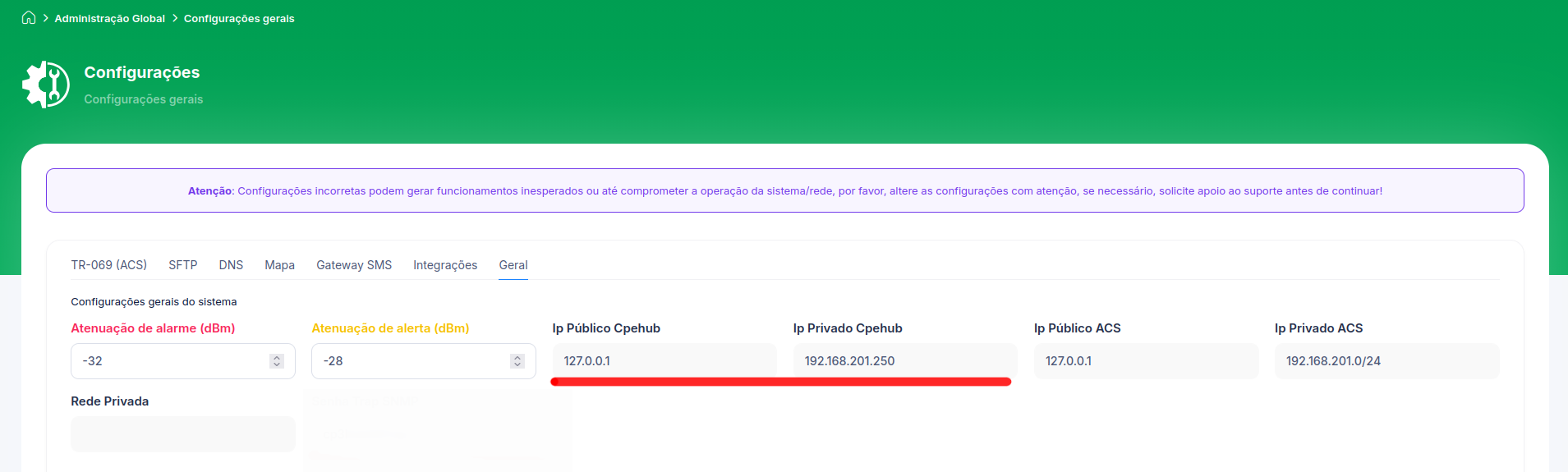
- The Cpehub Server's IP address (Public or via VPN)
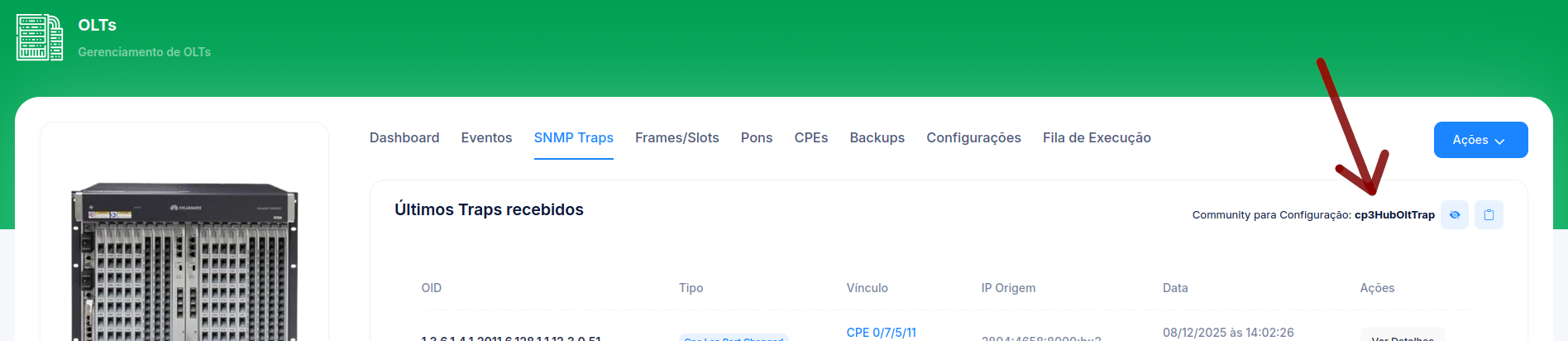
- The SNMP Trap password.
You'll find the IP on the VPNs screen or in the Administration -> Settings -> General tab menu
You'll find the password/community for sending traps on the OLT's "Snmp Trap" tab
Don't forget, all commands must be run in the Config view.
HUAWEI> enable
HUAWEI# config
HUAWEI(config)# Now you can run the commands
1. Configure the communication parameters
Inside config mode, configure the communication parameters with the following command:
HUAWEI(config)# snmp-agent target-host trap-paramsname "Cpehub" v2c securityname TRAP_PASSWORD
2. Configure the remote server
Inside config mode, run the command below:
Note: The YOUR_ENVIRONMENT_IP variable will be the server's IP — depending on your topology, enter the server's public IP or the VPN's internal IP.
HUAWEI(config)# snmp-agent target-host trap-hostname "Cpehub" address YOUR_ENVIRONMENT_IP udp-port 162 trap-paramsname "Cpehub"
We created the profile with id 1, remember that we'll use this id in steps 4 and 5.
3. Configure the format and enable
Inside config mode, run the command below:
HUAWEI(config)# snmp-agent trap-format standard
HUAWEI(config)# snmp-agent trap enable standard
4. Confirm it's working
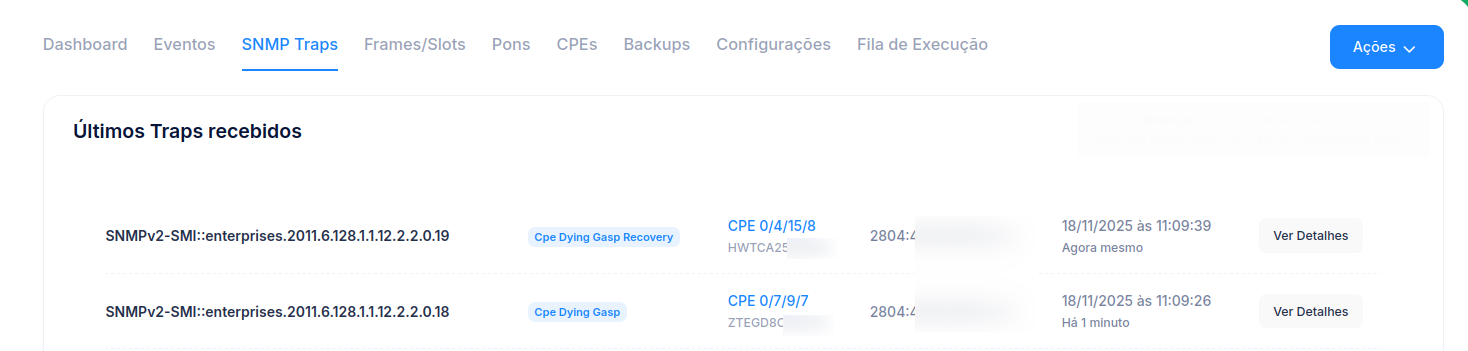
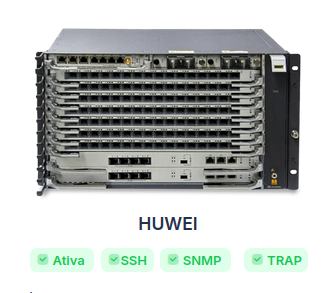
On the Huawei OLT screen in Cpehub, you'll see that the SNMP Trap indicator turns green:
You can also open the SNMP Traps tab and watch them arrive in real time: